If you’ve looked inside your child’s mouth and noticed a permanent tooth coming in behind a baby tooth, you may have wondered if something is wrong. Seeing what looks like a “second row” of teeth can be surprising, and many parents worry their child will need immediate treatment.
The good news is that this situation, often called “shark teeth”, is fairly common during childhood. In many cases, it’s simply part of the normal process of losing baby teeth and gaining permanent ones. However, there are times when a pediatric dentist should evaluate your child’s teeth to determine whether any treatment is needed.
At Pediatric Dentistry of Arnold, we’re here to help parents understand every stage of their child’s oral development and provide personalized guidance to support healthy, confident smiles.
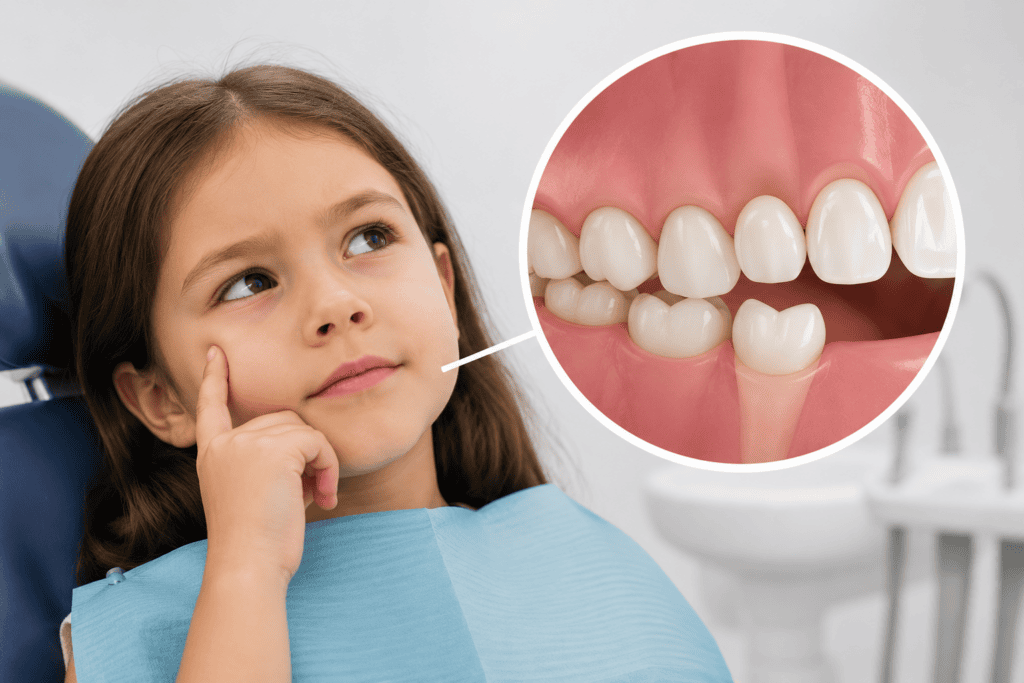
What Does It Mean When Permanent Teeth Grow Behind Baby Teeth?
Normally, as a permanent tooth begins to erupt, the roots of the baby tooth gradually dissolve. This allows the baby tooth to become loose and eventually fall out, making room for the permanent tooth.
Sometimes, however, the permanent tooth erupts before the baby tooth has become loose enough to fall out. Instead of emerging in the baby’s tooth’s usual position, the permanent tooth may come in behind it.
This creates the appearance of two rows of teeth, which is why many parents refer to the condition as “shark teeth.”
Is This Normal?
Yes,this can be a normal part of dental development for many children.
It most commonly occurs with the lower front teeth because these permanent teeth may erupt slightly behind the baby teeth before the baby teeth are ready to come out.
Every child’s mouth develops at its own pace. Some children experience this temporary stage without needing any treatment, while others may benefit from a pediatric dental evaluation.
Why Doesn’t the Baby Tooth Fall Out Right Away?
Several factors can affect when a baby tooth becomes loose.
For example:
- The permanent tooth may erupt slightly earlier than expected.
- The baby tooth’s roots may not have fully dissolved yet.
- Every child’s eruption timeline is unique.
- The permanent tooth may follow a slightly different eruption path.
Even when permanent teeth appear behind baby teeth, the baby tooth may still loosen naturally over the following weeks.
Should I Try to Pull the Baby Tooth Out?
Not unless it’s already very loose.
Parents should never force a baby tooth out because doing so may cause unnecessary discomfort or injure the surrounding tissues.
Instead, encourage your child to:
- Wiggle the loose tooth gently with clean hands.
- Continue brushing carefully around the area.
- Maintain good oral hygiene.
- Eat a healthy diet unless the tooth is causing discomfort.
If the baby tooth doesn’t become loose or you’re unsure what to do, it’s best to schedule a pediatric dental evaluation.
When Should I Schedule a Pediatric Dental Visit?
Although shark teeth are often not an emergency, it’s a good idea to have your child evaluated if:
- The baby tooth isn’t becoming loose.
- The permanent tooth continues erupting behind it.
- Your child experiences pain or swelling.
- The area becomes difficult to clean.
- You notice crowding or changes in tooth alignment.
- You’re simply unsure whether everything is developing normally.
A pediatric dentist can examine your child’s mouth and determine whether continued observation or treatment is the best approach.
How Can a Pediatric Dentist Evaluate the Situation?
During the appointment, your child’s pediatric dentist will carefully examine how the permanent tooth is erupting and assess whether the baby tooth is ready to come out.
In some cases, digital X-rays may be recommended to evaluate the position of developing teeth beneath the gums and provide a clearer picture of how the permanent teeth are erupting.
This information helps guide individualized treatment recommendations based on your child’s unique dental development.
Will My Child Need the Baby Tooth Removed?
Not always.
Many baby teeth loosen and fall out naturally after the permanent tooth begins erupting.
However, if the baby tooth remains firmly in place and prevents the permanent tooth from moving into its proper position, your pediatric dentist may recommend removing the baby tooth.
This decision is based on your child’s individual needs, age, tooth development, and clinical evaluation.
Can Shark Teeth Cause Long-Term Problems?
In many cases, no.
Once the baby tooth falls out, the permanent tooth often continues moving into a more natural position over time, especially while your child is still growing.
Regular dental cleanings and checkups allow your pediatric dentist to monitor this process and identify any concerns early if additional treatment becomes necessary.
Supporting Healthy Smiles as Your Child Grows
Changes in your child’s smile can sometimes look surprising, but they’re often part of normal development. If you notice permanent teeth coming in behind baby teeth, the best first step is to schedule an evaluation so your child’s pediatric dentist can determine whether monitoring or treatment is appropriate.
At Pediatric Dentistry of Arnold, we’re committed to helping children enjoy positive dental experiences while giving parents the information they need to feel confident about their child’s oral health. If you have questions about your child’s developing smile, contact Pediatric Dentistry of Arnold to schedule an appointment. Our caring team is here to support your family every step of the way.