What Actually Happens Inside an Infected Tooth
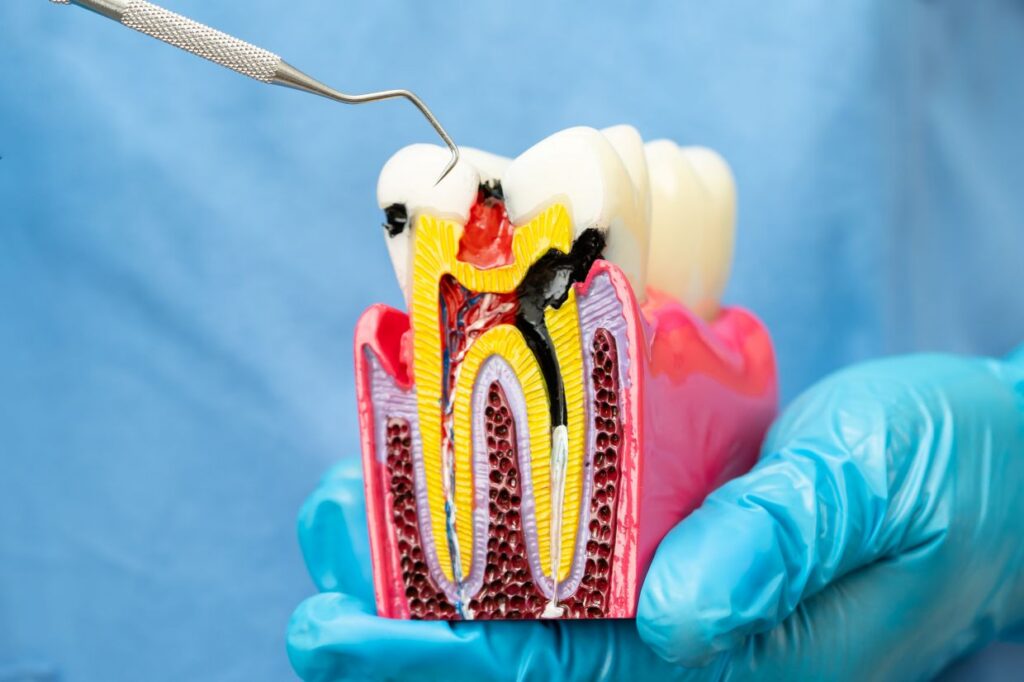
Before we talk about treatment, it helps to understand what’s occurring inside your child’s tooth. At the core of every tooth sits the pulp: a small bundle of blood vessels and nerves. When a child is young, these nerves and vessels helped the tooth grow and develop. But once the tooth is fully formed and in place, the pulp primarily serves as a warning system.
Decay that starts on the surface can penetrate deeper. It works through the hard enamel, then into the softer dentin layer. If left alone, it eventually reaches the pulp chamber. Once bacteria invade this space, infection takes hold. The pulp becomes inflamed and infected. Pressure builds inside the tooth because there’s nowhere for the inflammation to go. This pressure creates pain that can be severe enough to wake your child at night.
Without treatment, this infection doesn’t stay contained. It can spread into the bone surrounding the tooth. It can move toward the developing permanent tooth that sits underneath the baby tooth. The consequences of ignoring an infected pulp extend far beyond your child’s current discomfort.
Recognizing When Pulp Therapy is Needed
Some signs are obvious. Others are subtle. Knowing what to watch for means you catch problems before they become emergencies.
Symptoms Your Child Reports
- One tooth hurts more than others, with pain that doesn’t respond to over-the-counter pain reliever
- Chewing on one side causes pain, so your child avoids that side entirely
- Tooth pain wakes them up at night
- Pain is constant rather than occasional
Physical Signs You Can See
Swelling appears in the gums or face near one tooth. The gum around a specific tooth has a small bump that looks like a pimple, sometimes with drainage. A tooth looks darker or more gray than the teeth around it. Your child develops a fever along with tooth pain. Visible decay appears on the tooth surface.
The Silent Cases
Here’s what many parents don’t realize: sometimes there are no symptoms at all. Your child might have no pain, no swelling, no visible signs. Yet on X-rays taken during a routine checkup, Dr. Matt sees decay that has extended all the way to the pulp. Catching these cases early, before pain and infection develop, is one reason regular checkups and X-rays matter so much.
If your child is experiencing any of these signs, call us immediately. Infections can spread quickly, and early treatment prevents serious complications.
Why Saving the Tooth Matters More Than You Think
The instinct when a tooth is badly damaged is often to just pull it out. Extraction seems simpler. It’s faster. It ends the problem immediately. But extraction creates new problems that develop over years.
The Spacing Problem
Baby teeth aren’t temporary placeholders. They’re anchors that hold space. A baby molar won’t fall out naturally until your child is 10, 11, or 12 years old. During all those years, that tooth maintains the exact amount of space the permanent tooth needs to erupt properly.
Extract that baby tooth, and the surrounding teeth shift. They migrate into the empty space. By the time the permanent tooth tries to erupt, there’s no room left. The permanent tooth comes in at an angle, crowded against its neighbors. Now your child needs orthodontic treatment. Years of braces. Thousands of dollars.
Pulp therapy keeps the baby tooth in place. It maintains the space. The permanent tooth erupts normally.
Development, Function, and Protection
Your child’s jaw grows around their baby teeth. The way baby teeth are spaced and positioned influences how the jaw develops. Losing teeth prematurely disrupts this development. It affects not just tooth position but the structure of your child’s face itself.
Beyond structure, there’s function. Your child needs all their teeth to chew properly. Chewing is how children eat the foods they need for growth and development. It’s how they build jaw strength. Missing or problematic teeth affect nutrition and development.
An infection in a baby tooth doesn’t stay localized. Bacteria and infection can spread to the bone. They can travel downward to the developing permanent tooth that lies underneath. The permanent tooth is still forming during your child’s early years. Infection at this stage can damage it permanently. That damage might not be obvious until years later when the permanent tooth erupts. You might discover then that it’s discolored, weakened, or malformed. These problems are difficult and expensive to fix.
Pulp therapy eliminates the infection. It protects the developing permanent tooth from damage.
How Pulp Therapy Actually Works
A filling removes decay and closes the hole. Pulp therapy goes deeper. It removes the entire infected nerve tissue inside the tooth. This is why it requires more time and a different approach.
The Procedure Step by Step
First comes thorough numbing. We apply topical numbing gel. Then we inject local anesthetic around the tooth. For an anxious child, we might use additional comfort measures. Your child should feel no pain during the procedure.
Dr. Matt creates a small access opening in the top of the tooth. Through this opening, he can see into the pulp chamber where the infected tissue sits. Using specialized instruments, he carefully removes all the diseased pulp tissue. This includes the tissue in the pulp chamber at the crown of the tooth and the tissue that extends down into the root canals.
The canals are cleaned thoroughly. Dr. Matt uses small files to shape the canals and remove all infected material. The entire space is disinfected to ensure no bacteria remain.
Sealing and Protecting the Tooth
Once cleaned, the canals need to be filled. Dr. Matt fills them with gutta-percha, a rubber-like material that seals the space. But here’s what’s different about baby teeth: the gutta-percha used in children is designed to be resorbed. As your child’s baby tooth slowly sheds over the coming years, the gutta-percha dissolves along with it. This natural process allows the permanent tooth to erupt normally.
After the pulp is removed and canals filled, the tooth needs protection. A baby tooth that’s had its pulp removed is more brittle. It’s prone to breaking during normal chewing. So Dr. Matt places a crown, typically stainless steel, over the entire tooth. This crown protects the tooth and keeps it strong until it naturally falls out.
Timeline and Recovery
The actual pulp therapy appointment takes between 30 and 60 minutes depending on how many canals need treatment. Your child can eat soft foods immediately after. There’s no recovery period. Within a few days, any mild sensitivity resolves.
Dr. Matt Brings Specialized Expertise in Pulp Therapy
Not every pediatric dentist performs pulp therapy regularly. It requires specific training and hands-on experience. Dr. Matt completed comprehensive training in pediatric endodontics (the specialty dealing with tooth nerves) as part of his Doctor of Dental Surgery program at University of Missouri Kansas City School of Dentistry. He has performed hundreds of successful pulp therapy procedures on children.
His military service as an Army dental officer trained him to work with precision under challenging circumstances. This background shows in how carefully he approaches delicate work inside a tooth. He understands that working inside a small space requires steady hands and meticulous technique.
What Sets Dr. Matt Apart
- Takes time to remove every bit of infected tissue rather than rushing
- Ensures canals are completely cleaned and sealed
- Recognizes that this treatment, done well, saves your child’s tooth and prevents years of problems later
- Uses advanced techniques and current materials based on recent research
- Understands child psychology and anxiety management during procedures
- Explains what’s happening in ways children understand
- Positions children for comfort during the procedure
- Takes breaks when needed rather than forcing a child to sit still
For anxious children, Dr. Matt’s experience matters. He knows how much numbing is needed and how to position a child for comfort. He recognizes that a calm, unhurried approach produces better results and helps children feel less frightened during emergency treatment.
After Treatment: What Parents Need to Know
Your child can eat immediately after pulp therapy, though we recommend soft foods for the first 24 hours. Some mild sensitivity to temperature is normal for a few days. Pain should resolve within a week.
The treated tooth will eventually shed naturally, just like any other baby tooth. The special gutta-percha filling dissolves as the root resorbs over time. The permanent tooth erupts into the space where the baby tooth was, typically coming in properly aligned because the baby tooth maintained proper spacing.
Bring your child for regular checkups every six months. Dr. Matt monitors the treated tooth and tracks how the permanent tooth is developing underneath. X-rays confirm that healing is progressing normally and the permanent tooth is forming correctly.
Caring for the Treated Tooth
- Brush twice daily gently around the crown
- Floss daily around the treated tooth
- Avoid hard, sticky, or crunchy foods that might damage the crown
- Wear a mouth guard during contact sports
- Continue fluoride treatments as recommended
Pulp Therapy vs. Extraction: The Long-Term View
Extraction seems like the quick answer. But consider what happens over the next several years.
An extracted baby tooth loses its space-holding function immediately. Adjacent teeth shift within weeks. The gap closes. When the permanent tooth tries to erupt, it has nowhere to go. Crowding develops. Your child needs orthodontic treatment in a few years. Braces for two to three years. Ongoing expenses and adjustments.
Pulp therapy maintains that tooth in place. It keeps the space open for the permanent tooth. No crowding. No braces needed. Your child’s teeth erupt normally and naturally.
The math is simple. A pulp therapy treatment now prevents thousands of dollars in orthodontic treatment later. More importantly, it preserves your child’s normal development and prevents the complications of extracted baby teeth.
For most baby teeth that can be saved with pulp therapy, saving them is always the better choice.
Expert Pulp Therapy Across Arnold and South County
Families in Arnold, Oakville, Mehlville, Affton, Festus, Imperial, and surrounding South County neighborhoods understand that emergency dental care matters. They know that when their child is in pain, they need a dentist who can provide specialized treatment immediately.
South County parents trust Dr. Matt because he doesn’t recommend extraction as the default solution. He takes the time to save teeth when possible. He understands that preserving baby teeth prevents future problems and supports their child’s normal development.
Whether your family lives in Oakville near the Mehlville School District, in Affton where families value quality care, in Festus along the scenic areas, or anywhere else in South County, we’re positioned to provide emergency pulp therapy when your child needs it.
When Your Child Needs Pulp Therapy in Arnold, MO
Tooth infections don’t wait for convenient appointment times. If your child is experiencing severe pain, visible swelling, or fever with tooth pain, contact us immediately.
Pediatric Dentistry of Arnold
22 Arnold Mall Arnold, MO 63010
(314) 230-8615
We handle emergency pulp therapy appointments and can often see your child the same day you call. Early treatment stops the pain, eliminates the infection, and saves the tooth. Dr. Matt is ready to help your child when they need it most.